


undefined
Blog
Introduction to Common Oil Drilling Rigs
Release time:
2024-06-18
The drilling rig is used to place lifting equipment and tools such as trolleys, hoists, and large hooks, bearing the loads generated by drilling, casing, and other operations, providing the height and space for drilling and storing the pipe column. It is a type of tower-like steel structure.
The drilling rig consists of the main body, trolley platform, trolley frame, second layer platform, vertical pipe platform, and working ladder.
Classification of drilling rigs.
According to the structural characteristics of the drilling rig, it can be divided into the following four categories:
1. Tower-type drilling rig.
The tower-type drilling rig is one of the most widely used rigs in early domestic land drilling. It is a spatial structure in the shape of a square pyramid, with a square cross-section. This type of rig is generally a single-pole assembly structure, which takes time to install and dismantle, and is used for high-altitude operations. However, it has a wide base for support, and the rig itself is a closed overall structure, thus providing good overall stability and high load-bearing capacity.
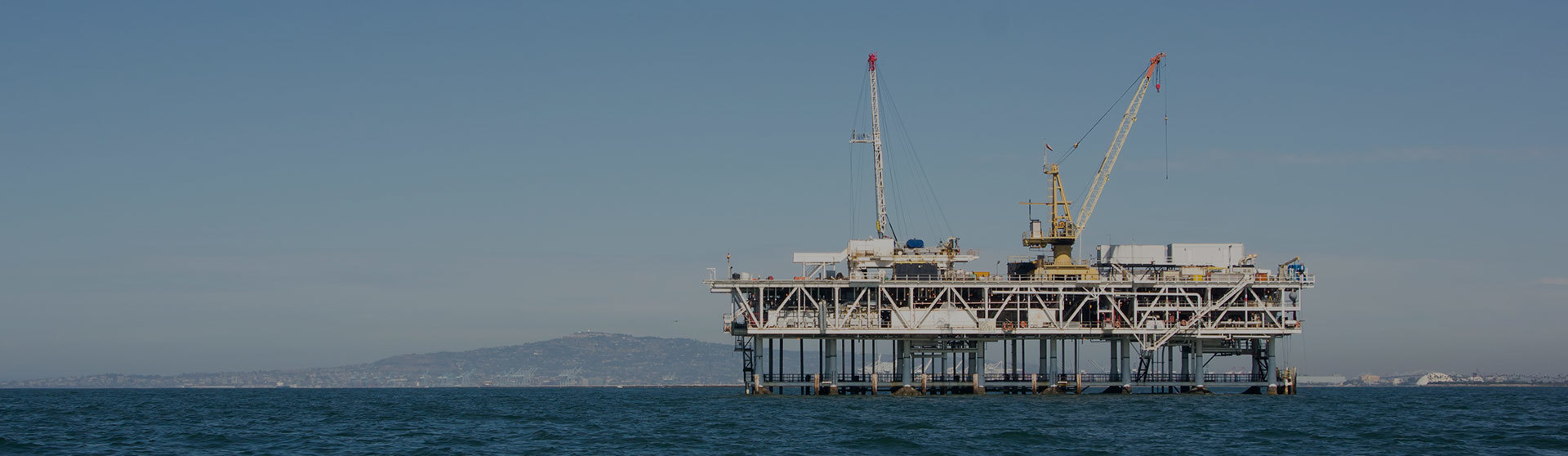
The tower-type drilling rig is also the main structural form of offshore drilling rigs.
2. A-type drilling rig.
The A-type drilling rig, as the name suggests, has an appearance resembling the uppercase letter A. It consists of two lattice or tubular legs, connected to the trolley platform and additional upper members of the rig, forming an 'A' shaped spatial structure. The leg cross-section can be rectangular or triangular, and this type of rig has good load-bearing capacity and overall stability. The segments are connected by pins, and the rig is installed at a low position, using a truss or struts relying on winch power for overall lifting. The rig is open at the front and back, providing good visibility for the driller, hence it is called a 'full-vision rig'.
3. Mast-type drilling rig.
The mast-type drilling rig is mainly used as a rig for truck-mounted drilling machines and workover rigs. It consists of one or several lattice or tubular legs forming a spatial structure. During operation, it tilts towards the wellhead at an angle of 3° to 8°, requiring guy ropes to maintain structural stability.
Mast-type drilling rigs can be divided into telescopic and non-telescopic types, with truck-mounted drilling machines and workover rigs mostly being telescopic.
4. K-type drilling rig.
Currently, the commonly used drilling rig for land drilling is the front-opening rig, which has an open front and a П-shaped spatial truss structure. The two sides are welded into several segments, and the back is a truss rod system. Each segment and component is connected by pins or bolts, allowing for low-position installation, utilizing winch power or hydraulic cylinder thrust for overall lifting, with the advantage of good overall rigidity. This type of rig can also be made into a telescopic rig.
Main structure of the drilling rig (taking the commonly used rope-free K-type rig in major oil fields as an example).
Main body of the rig: generally divided into 4 to 5 segments, connected into one by pins. The upper segment is a quadrilateral closed structure, while the other segments are front-opening Л-shaped structures, with the back frame and diagonal braces being removable.
Second layer platform: consists of the platform body, operating platform, guiding beams, and inner and outer railings.
Cage ladder: installed on both sides of the rig, for operators to go up and down the trolley and the second layer platform.
Lifting device: includes the lifting truss, buffer hydraulic cylinder, lifting rope, and various lifting pulleys.
Rig accessories: include vertical pipe operating platform, casing centering platform, large clamp balance weight, etc.
Function of the base: used to install drilling equipment (drilling rig winch, turntable, power unit, diesel engine, etc.), place drill pipes and drill collars, install the rig, and provide installation space for wellhead devices and an operational platform for drilling operations. It bears the drilling work load, rig lifting load, and equipment self-weight load, and distributes these loads to the foundation and base.
Classification of the base:
Box-stacked base.
Block base (also known as block-mounted base).
Rotating base.
Slingshot base (also known as double-lifting base).
Telescopic base.
Note: The last three types are all self-elevating bases.
Main structure of the base (taking the slingshot base as an example).
Bottom layer: mainly consists of left and right bases and the connecting truss between the left and right bases.
Middle layer: mainly consists of front and rear vertical columns, diagonal vertical columns, lifting devices, and lowering devices.
Top layer: mainly includes left and right upper seats, vertical root box beams, turntable beams, winch beams, motor beams, and blowout preventer guide rail devices.
Platform: mainly consists of various planks, walkways, cantilever platforms, and railings around the drilling platform.
Peripheral auxiliary components: include ramps, escape slides, and various ladders leading to the drilling platform.
The safety load-bearing capacity of the drilling rig is generally indicated by the maximum hook load of the equipped drilling machine or workover rig. It refers to the maximum load that the large hook can bear (including the weight of the traveling system) under conditions without wind load, with the dead rope fixed at a designated position, and without storing vertical roots or sucker rods on the second layer platform.
Height.
The nominal height of the drilling rig: refers to the vertical height H from the surface of the rig leg base to the bottom surface of the trolley beam. The effective height of the rig: refers to the vertical height from the top plane of the drilling platform beam to the bottom surface of the trolley beam.
The effective height of the drilling rig is determined based on the requirements for drilling operations and the height of related equipment, considering the requirements for rig relocation, such as the height of the traveling system (the height from the top of the trolley to the bottom of the hook), the limit length of the vertical root, and the safety distance to prevent collisions (i.e., the distance to prevent the trolley from colliding with the trolley beam due to operational failure during work).
The height of the second layer platform of the drilling rig refers to the vertical height from the drilling platform plane to the bottom surface of the second layer platform.
It depends on the length of the vertical root and the position of the second-level platform operation table. To facilitate the rig worker in hanging and unhooking the hoisting card on the second-level platform, the bottom surface of the operation table (which is usually also the bottom surface of the second-level platform) should be 1.8 to 2.0 meters lower than the height of the vertical root stored in the vertical root box. Typically, the second-level platform has two or three different height installation positions to accommodate the needs of operating vertical roots of different lengths.
Second-level platform capacity
The capacity of the second-level platform refers to the number of vertical roots that can be stored by the beam of the second-level platform (installed at the minimum height of the second-level platform), expressed in terms of the total length of the vertical roots (drill rods, oil pipes, or sucker rods).
The beam of the rig should be able to meet the needs of storing all vertical roots, so the capacity of the second-level platform mainly depends on the height of the beam and the effective area it encompasses (the number of vertical roots stored). Wanweier
Dimensions of the upper and lower bases of the tower-shaped rig and the height of the gate
The dimensions of the upper and lower bases of the tower-shaped rig refer to the horizontal distance between the bottom surface of the overhead crane beam and the top surface of the drilling platform beam along the axis of the rig's legs. They should meet the needs of convenient and safe operation. The upper base dimension is determined based on the external dimensions of the overhead crane and the working requirements of the trolley, while the lower base dimension should be determined based on the layout of related equipment and tools, the size of the drilling platform area required for lifting and lowering operations, and the storage of drilling tools.
The height of the gate of the tower-shaped rig refers to the vertical height from the plane of the rig's leg base to the top surface of the gate, which should generally be higher than 8 meters to facilitate lifting a single piece onto the drilling platform.
Next Page
Next Page
Vanwell Oil Equipment(Tianjin)Co.,Ltd.
